Build a solid foundation for crude corrosivity, with information on naphthenic acid corrosion and high-temperature sulfidation, affected areas, and the evidence used to screen risk.
Module Overview
Corrosion in Refinery
Crude Corrosivity
Module 1
Crude corrosivity fundamentals
Build practical confidence through short lessons, guided decisions, and field-ready checks.
Duration10-15 minutes
FormatInteractive module
AssessmentKnowledge check
Updated30/09/2026
Module progress0%
Complete the module quiz to record progress.
Operational Scenario
A new crude blend enters the refinery
A new crude blend changes sulfur, acidity, and operating conditions. Before selecting mitigation or inspection actions, the team must understand and distinguish the leading damage mechanism(s) and identify the evidence needed to screen affected circuits.
Topics and Subtopics
Select a topic to explore its main ideas, practical considerations, and subtopics.
Overview
What crude corrosivity means
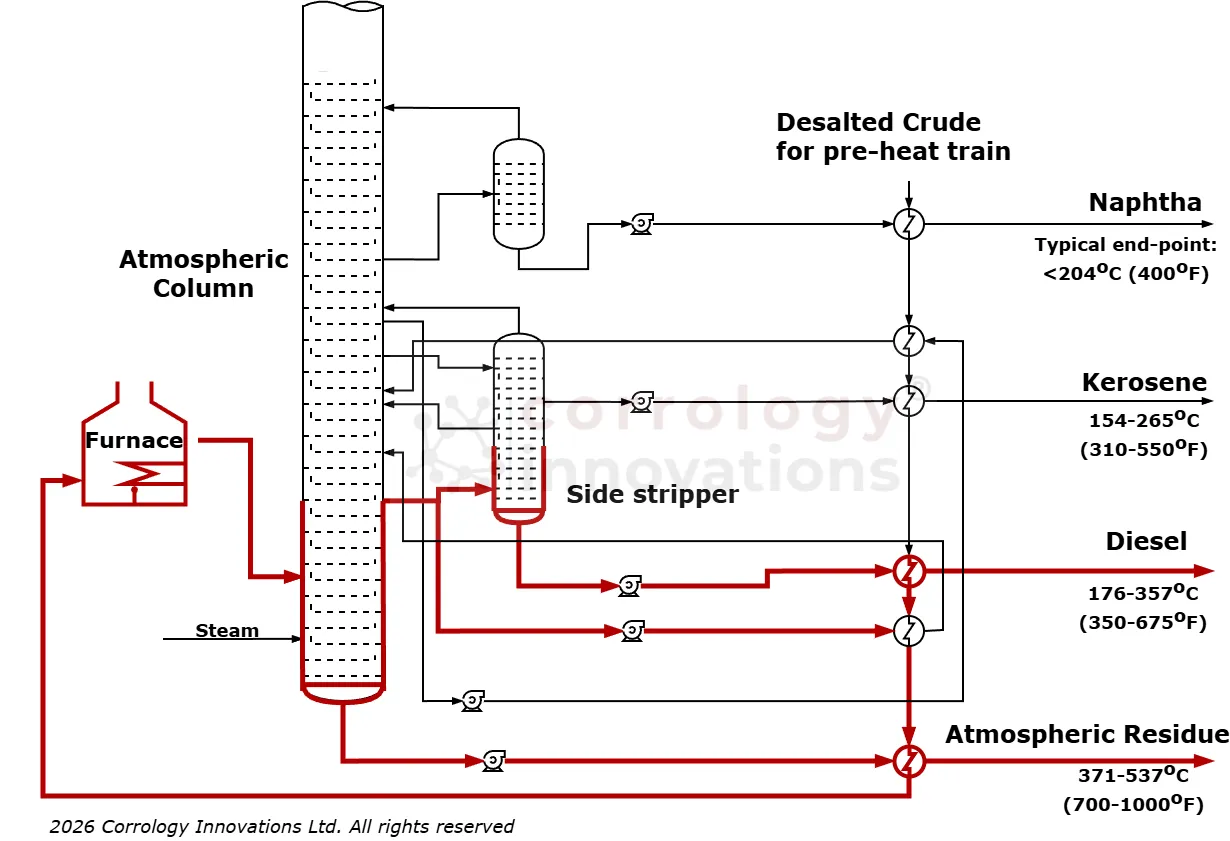
Crude corrosivity is typically described as a joint action of naphthenic acid corrosion and high temperature sulfidation. It is present in hot sections (>230°C/>450°F) of CDU and VDU units where sulphur species and naphthenic acids may be present.
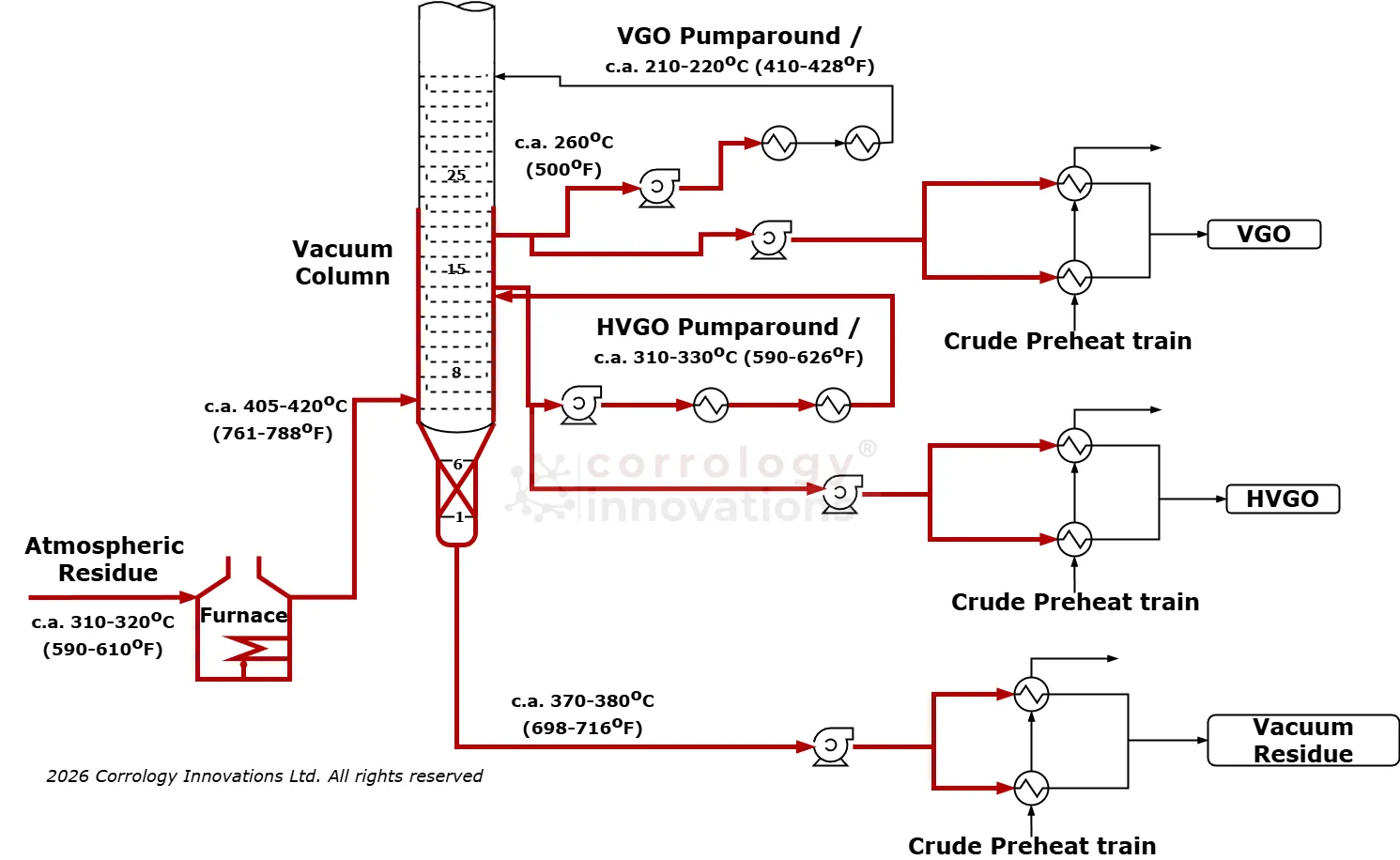
Key point: The most prominent effect of crude corrosivity is expected in vaccum gas oil sidecuts (e.g. Heavy Vaccum Gas Oil - HVGO) and vacuum residue.
Evidence to combine
Sulfidation and naphthenic acid corrosion are the leading damage mechanisms in hot sections of CDU and VDU units.
Proceeds without an electrochemical cell - no water present.
VGO, HVGO, and vacuum residue lines are particularly susceptible.
Primary drivers
Naphthenic acid and sulphur concentration and speciation.
Temperature: accelerates both mechanisms.
Local turbulence and multiphase flow: primarily intensify naphthenic acid attack; at high S level and thick loose iron sulphide scale flow will also matter.
Circuit screening
Affected areas and evidence
A practical screen starts with equipment, process conditions, metallurgy, and prior inspection findings, then narrows attention to representative locations.
Key point: Rank locations by susceptibility and consequence before choosing the next measurement.
Choose a method
Subtopics
Expand a method to explore
Map | Rank | VerifyBuild a circuit screenView details
Method briefing
Build a circuit screen
[Typical crude corrosivity locations in CDU. Crude feed line after crude/resid exchangers. Furnace tubes and transfer line. Bottom part of crude tower and diesel stripper. Bottom pumparound (PA) up to first PA/Crude exchanger Atmospheric Residue line to Resid/Crude exchangers.]
[Typical crude corrosivity locations in VDU. Feed line from CDU. Furnace tubes and transfer line. Mid- and bottom sections of vacuum tower with relevant PAs. Vaccum Gas Oil Side-cut lines e.g. VGO/LVGO/MVGO/HVGO. Vacuum Residue line to Residue/Crude exchangers.]
Conceptual illustration.
Map | Rank | VerifyAnalyze and DecideView details
Method briefing
Analyze and Decide
[Typical crude corrosivity locations in CDU. Crude feed line after crude/resid exchangers. Furnace tubes and transfer line. Bottom part of crude tower and diesel stripper. Bottom pumparound (PA) up to first PA/Crude exchanger Atmospheric Residue line to Resid/Crude exchangers.]
[Typical crude corrosivity locations in VDU. Feed line from CDU. Furnace tubes and transfer line. Mid- and bottom sections of vacuum tower with relevant PAs. Vaccum Gas Oil Side-cut lines e.g. VGO/LVGO/MVGO/HVGO. Vacuum Residue line to Residue/Crude exchangers.]
Conceptual illustration.
Interactive Challenge
Interactive diagnostic case study
Select the first evidence to review
Decision point
The refinery receives a higher-acidity crude blend. Choose the evidence that should be reviewed first before declaring a new damage mechanism or changing an inspection plan.
Illustrative screening indicators
Diagnostic clues
Start with the change
Compare the new blend and operating history with the baseline period represented by the inspection data.
Locate the exposure
Use circuit conditions and metallurgy to determine where the chemistry change could become active damage.
Reveal the explanation
Screen before you prescribe
The correct first step is to join the blend change to the local operating envelope and susceptible circuit. This avoids treating a bulk assay value as proof of damage or dismissing a real change because one result appears normal.
Recommended action: Document the screening basis, identify representative monitoring points, and carry the confirmed risk drivers into the mitigation and inspection modules.
Field Checklist
Crude corrosivity screening
Use this checklist when a crude blend, operating envelope, or inspection trend changes.
0 of 5 completed
Knowledge Check
Crude corrosivity fundamentals knowledge check
Select the best answer for each question, then submit it to see the reasoning. Pass mark: 70%.
Not yet passed.
Score: 0 / 2
Next Steps
Continue the course
Mitigation strategies
Continue to Module 2 to review operating, materials, and process mitigation options.